

Warnings ignored: 40 years of inaction on alcohol harm
Forty years ago, a progressive and prescient Senate Committee report identified alcohol and its harms as a problem of epidemic proportions.

Home / News and media / Media releases
More information
Search results:
Forty years ago, a progressive and prescient Senate Committee report identified alcohol and its harms as a problem of epidemic proportions.
The six-year delay in introducing mandatory pregnancy health warnings on alcohol products has resulted in an estimated 450,000 alcohol-exposed pregnancies, but momentum is growing for State and Commonwealth Health Ministers to act when they next meet on Friday, with the West Australian Government calling for immediate action on labelling.
Ahead of the first Ashes Test in Brisbane on Thursday, new polling has found more than four out of five Australians believe that the alcohol industry should not be allowed to advertise alcoholic beverages to children during children’s television viewing times.
A new analysis of political donations spanning two decades has revealed how the alcohol industry donates generously and strategically to political parties in its efforts to secure favourable policy outcomes.
Queensland politicians and election hopefuls are being reminded there is still more work to be done to reduce the State’s heavy alcohol toll.
The Foundation for Alcohol Research and Education (FARE) welcomes the comprehensive recommendations of the Northern Territory Alcohol Policies and Legislation Review.
The lack of safeguards to protect against interference by the alcohol industry threatens to undermine the United Nations (UN) Sustainable Development Goals (SDGs), and put at risk global health.
International health experts are increasingly concerned by the deliberate targeting of children by the alcohol industry and the absence of government regulatory frameworks to protect children and keep the industry in line.
International health experts are increasingly concerned by the deliberate targeting of children by the alcohol industry and the absence of government regulatory frameworks to protect children and keep the industry in line.
A highly targeted nation-wide minimum price on alcohol could deliver a dramatic reduction in alcohol harm, save lives and reduce alcohol consumption among the heaviest drinkers.
New research has found that reducing alcohol consumption at the population level would lead to a reduction in cancer deaths in Australia.
A number of leading Australians have lent their support to a campaign to remove alcohol sponsorship from professional sport.
On the 9th hour of the 9th day of the 9th month of every year, International FASD Awareness Day is marked around the world to raise awareness of Fetal Alcohol Spectrum Disorder (FASD) and to spread the message that no amount of alcohol use is safe for a developing baby.
New South Wales communities are being robbed of the opportunity to object to or complain about liquor licence applications, by an unfair, complex and outdated regulatory system.
Health experts have welcomed Commonwealth Government plans to include preventive health as a central pillar of a new the national sports plan but have cautioned against developing only half a solution.
A new submission to the Northern Territory Alcohol Review has exposed the lengths the alcohol industry is prepared to go to undermine and attack scientific evidence in a blatant and deliberate attempt to mislead the inquiry.
The Northern Territory (NT) Government should introduce a floor price on alcohol; a profound intervention that would reduce harm and save lives.
Life is better with the support of family and friends. That messaging is at the heart of Pregnant Pause, the innovative health promotion campaign that asks participants to take a break from alcohol during their pregnancy or the pregnancy of a loved one.
A new economic report looking at what Australia invests in preventive health has found Australia ranks poorly on the world stage and has determined that governments must spend more wisely to contain the burgeoning healthcare budget.
People arrested or convicted of alcohol-related offences would be required to take two alcohol breath tests per day or wear a continuous alcohol monitoring bracelet, under a proposal currently before the Victorian Sentencing Advisory Council.

South Australia has become the first state in the nation to pass landmark alcohol delivery reforms.

A Federal Government inquiry has today recommended the Australian Government take action on alcohol marketing and rapid home delivery, measures advocates say will significantly reduce
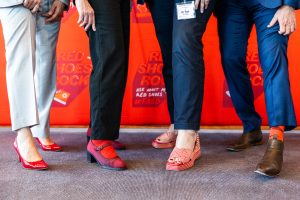
September marks International FASD Awareness Month, an opportunity to raise awareness of Fetal Alcohol Spectrum Disorder (FASD).
Community organisations have welcomed new legislation in NSW to hold alcohol companies that sell their products online to a higher standard.
Today community leaders and organisations have released an open letter calling on the Woolworths Board to stop its plans to build one of Australia’s biggest Dan Murphy’s within walking distance of three dry Aboriginal communities.
Today the Northern Territory (NT) Government will introduce legislation that gives Woolworths the power to circumvent the independent Liquor Commission and build one of the largest bottle shops in the country within walking distance of three dry Aboriginal communities.
There are gaping holes in our laws for online alcohol sales, including no requirement for underage ID checks or for preventing delivery to people who are intoxicated.
The Foundation for Alcohol Research and Education (FARE) welcomes Federal Minister for Health, the Hon Greg Hunt’s announcement of nearly $24 million for diagnostic and support services for people with Fetal Alcohol Spectrum Disorder (FASD) to coincide with International FASD Awareness Day.
With almost a Third Of Men surveyed in Canberra keen to cut down their alcohol use, the Foundation for Alcohol Research and Education (FARE) has launched TOM with support from the ACT Government.
The home is where the majority of Australians who use alcohol have the largest quantity per occasion and drink most frequently, rather than at pubs, clubs or restaurants.
First-ever consumer testing of the most effective alcohol warning label has found a red, black and white label saying ‘health warning’ was the best in drawing attention to the risks of alcohol use and pregnancy.
First-ever consumer testing of the most effective alcohol warning label has found a red, black and white label saying ‘health warning’ was the best in drawing attention to the risks of alcohol use and pregnancy.
Food safety Ministers are being urged to put the health and wellbeing of families and communities first by approving the most effective pregnancy health warning label on alcohol products when they meet next month.
Fill out the form below to receive regular updates & resources.