Now that Fetal Alcohol Spectrum Disorder (FASD) Awareness Month is over, the FARE Health Programs team has been reflecting on how we approach raising awareness of FASD in a crowded calendar of awareness days and months. In this blog I reflect on the impact we made, our learnings, and how we can continue to strengthen this work. It was important to me to capture and share what we did, because sharing health promotion practice and learnings helps increase our collective impact in supporting healthy and well communities.
What is FASD?
FASD is a lifelong disability caused by prenatal alcohol exposure and can occur for many reasons, including alcohol use before a person knows they are pregnant, an unplanned pregnancy, limited awareness of the risks, or alcohol use disorder. Because FASD is a spectrum disorder, it affects everyone differently, which can make it difficult to recognise and understand.
People with FASD may experience challenges with learning, memory, attention, speech and language development, emotional regulation and behaviour. Without appropriate support, they are also more likely to experience poorer health outcomes, mental health conditions, alcohol and other drug dependence, and involvement with out-of-home care and the justice systems. Research has identified hundreds of recognised co-occurring conditions, highlighting the complexity of the disability.
FASD is not rare. It’s estimated that around one in 28 Australians may have FASD, equivalent to roughly one child in every classroom."
Yet FASD remains widely misunderstood, under-recognised and heavily stigmatised. It’s often considered something that occurs in other places, or to other people, but the truth is that wherever alcohol is, FASD is also there.
Why Red Shoes Rock
To help bring attention to FASD, FARE joined the global Red Shoes Rock movement, founded in 2013 by Canadian RJ Formanek, an adult living with FASD.
He began wearing red shoes to start conversations about his otherwise invisible disability. What started as a personal act of advocacy has grown into a global awareness movement that helps make FASD more visible and gives a voice to people affected by prenatal alcohol exposure.
Red Shoes Rock is at its peak in September, which is International FASD Awareness Month, and 9 September is International FASD Awareness Day. The date is intentionally significant, with the ninth day of the ninth month symbolising the recommendation of no alcohol during pregnancy. The day has been acknowledged in Australia since 1999 when NOFASD Australia coordinated the ringing of bells in some cities at 9.09am.
In Australia, Red Shoes Rock is led by FARE, NOFASD Australia, NACCHO, the FASD Hub and the FASD Research Australia NHMRC Centre of Research Excellence in Fetal Alcohol Spectrum Disorder, with each organisation contributing in different ways to raise awareness and improve understanding of FASD.
For FARE, our goals for Red Shoes Rock 2026 were to raise awareness of FASD and the importance of alcohol-free pregnancies, reducing barriers to help-seeking, and elevating the voices of people living with FASD, along with the families, carers and services that support them."
What we did for 2026
I’m immensely proud of what the FARE team, and partner organisations achieved this year.
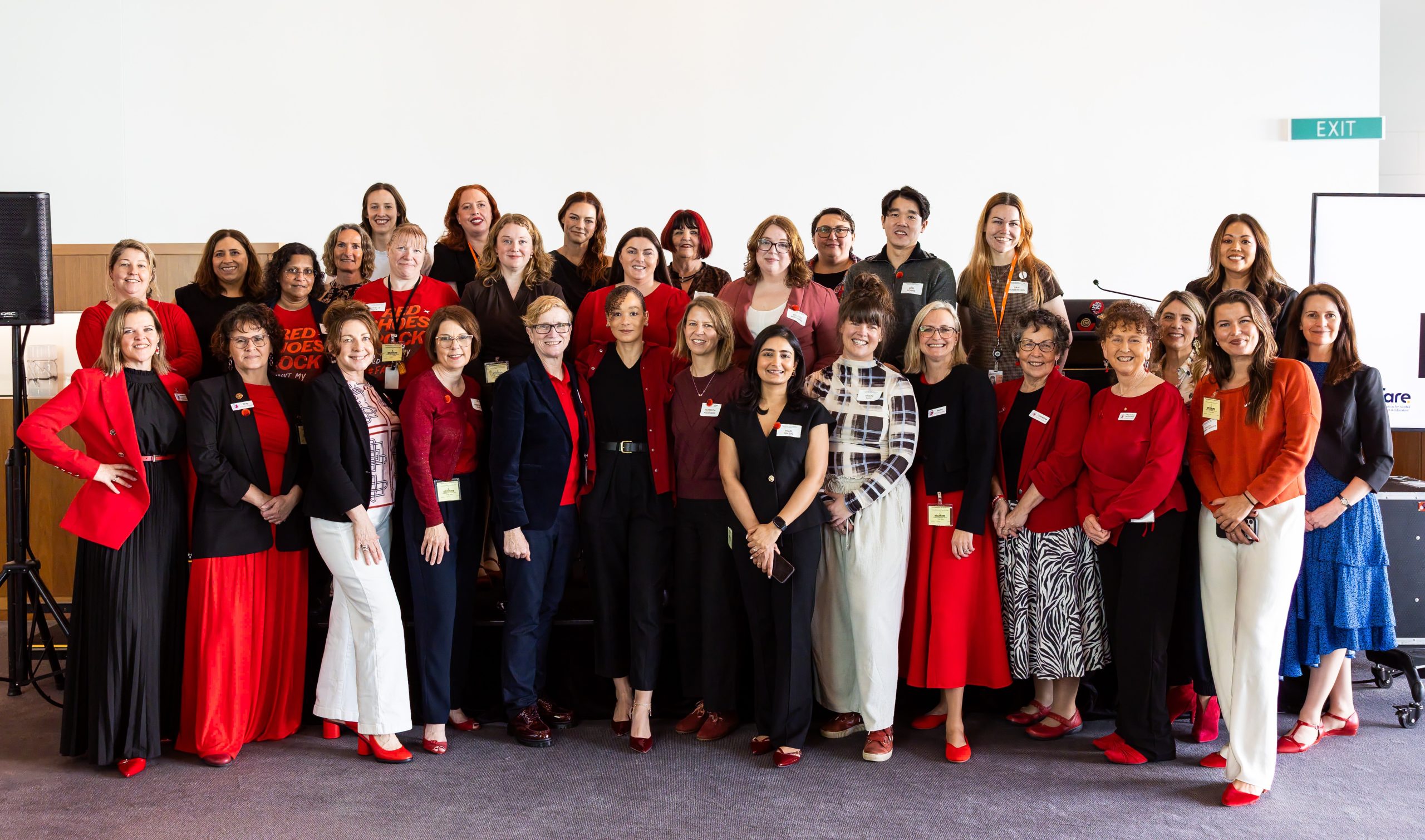
FARE led the Red Shoes Rock website refresh, we delivered a comprehensive communications and social media campaign and we sponsored and participated in two key events: one targeted towards health professionals and one towards the general community. We undertook a lived experience storytelling project where we sought to amplify the voices of those impacted by FASD and coordinated the fourth year of an event at Parliament House in Canberra.
For me, these two last activities were the highlights of this year’s FASD Awareness Month.
This is because amplifying the voices of those affected by FASD is central to the intent behind the Red Shoes Rock movement, and because too often we focus on data and reports and forget about the people who are not only affected, but often quietly working away tirelessly each in their own ways to make a difference in their family, community and nationally. To enable these stories to be shared was incredibly meaningful to me and our team.
I’ve heard time and again how isolating FASD can be. I hope that by sharing lived experience stories, people who may be wondering whether they have FASD, or supporting a family member with FASD, feel less alone. I hope these stories help people feel seen, supported and connected to others with similar experiences, while also raising awareness and challenging the stigma that continues to surround FASD.
This year’s Parliament House event focused on Exploring the Complexities of FASD and Out-of-Home Care. Data from the Australian FASD Registry indicates that only around 20 per cent of children diagnosed with FASD live with a biological parent, meaning many are living in out-of-home care or other care arrangements.
Identifying and supporting FASD in these settings can be particularly challenging, especially when information about prenatal alcohol exposure is unavailable or when disability, trauma, racism and other adversities overlap.
These challenges are especially significant for Aboriginal and Torres Strait Islander children and families, given their overrepresentation in out-of-home care systems.
When FASD goes unrecognised, children are more likely to miss out on support, experience instability in their out of home care placement, disengage from school and come into contact with the justice system.
While the National FASD Strategic Action Plan 2018-2028 has delivered meaningful progress in prevention, diagnosis and support, there is still significant work ahead to ensure equitable outcomes for all children and families affected by FASD.
What we achieved in September
There were many ways that this year’s campaign reached a broad audience and sparked important conversations.
Highlights included:
- More than 75 people attended the Parliament House event in person including MPs, lived experience experts, and leaders from the for-purpose sector, with more than 60 joining via livestream.
- More than 39,000 people visited the Red Shoes Rock website during September.
- Nearly 190,000 people were reached through social media.
- More than 270 people attended the Women’s Agenda panel event.
- More than 600 midwives were reached through the Australian College of Midwives conference, including 30 participants in a dedicated workshop.
- Seven people generously shared their lived experience through our storytelling project.
Behind every number is a conversation, connection or opportunity for someone to better understand FASD."
What we learned
I’ve been reflecting on all the work that was undertaken, and on what made this September so successful. At FARE, it was a true team effort, as everyone across the organisation gets behind FASD Awareness Month.
We spent a lot of time in the planning phase to ensure we had clarity about what we wanted to achieve, and while we were focused on achieving these goals, we kept people at the very centre of this work. I’m fortunate to work with an exceptional group of people, who are incredibly thoughtful, considered, detail orientated and focused on excellence and achieving impact.
Creating a safe and respectful environment for the storytelling project was one of our most important priorities. We wanted to give participants full agency over what and how their story was shared and used a person-centred approach, and by working with Lived Experience Educator Morgan Cataldo we developed a considered and thorough process for ethical storytelling.
It was a privilege to work with a wonderful group of participants who champion FASD advocacy in their own communities every day, helping to increase the reach of their stories."
Another big learning was having the courage to pause some activities, try new approaches, or sharpen our focus on other things. Alongside this, we gained many smaller but equally valuable insights into the systems and ways of working that helped us share information, stay connected, and work effectively together as a team and with our partners.
Beyond September
As is the case for all awareness days and months, these efforts to raise attention and action on improving prevention, diagnosis and informed FASD supports don’t stop once the date has passed.
They must continue beyond September.
Please do continue the conversations and share information around alcohol and pregnancy and breastfeeding and FASD – you can learn more or get involved in future awareness activities by visiting the Red Shoes Rock website.
With Thanks
Red Shoes Rock is a true team effort, and I’m incredibly grateful to everyone who contributed throughout September.
Thank you to the team at FARE, lived experience advocates, and partners at NOFASD Australia, NACCHO, the FASD Hub and the FASD Research Australia NHMRC Centre of Research Excellence in Fetal Alcohol Spectrum Disorder for your collaboration, expertise and commitment.
Thank you also to the Australian College of Midwives, Women’s Agenda, and the many incredible speakers who contributed to the Parliament House event.
Finally, thank you to Morgan Cataldo and Jo Le for your guidance and support throughout the campaign.
Most importantly, thank you to everyone who helped start a conversation about FASD this September. Every conversation matters.
Kristie Cocotis is the Health Program Director at FARE.