

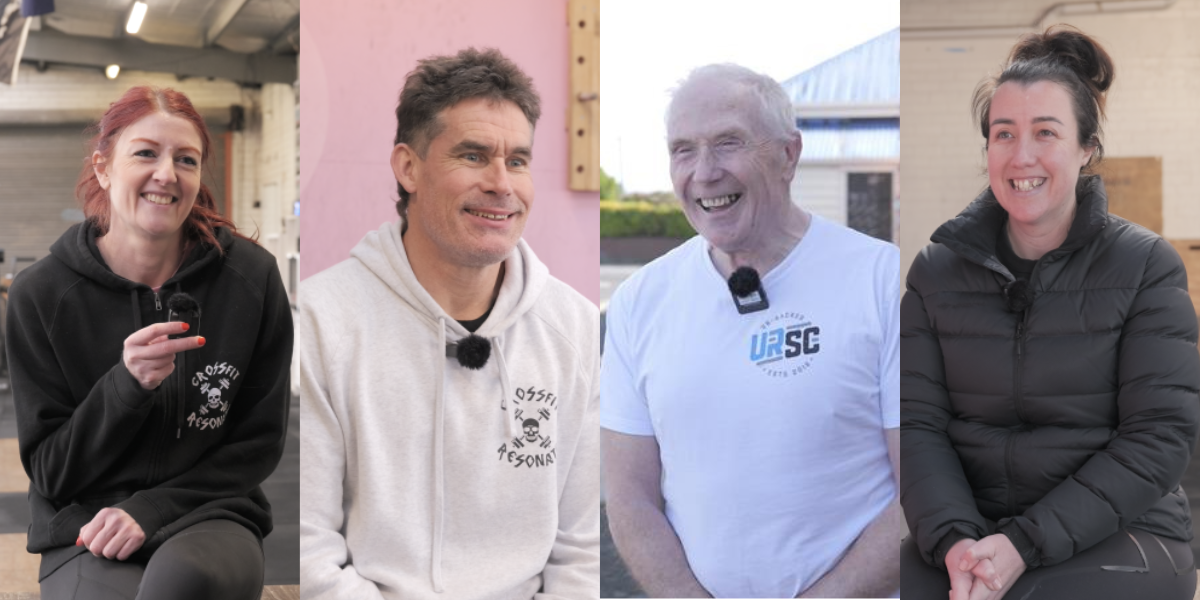
Courtney is sitting down in the gym, smiling from ear to ear.
She’s reminiscing on how her life has changed since she went sober three years ago.
“I’m back. The me that hasn’t existed for a long time, it’s who I’m supposed to be now,” Courtney, 40, said.
Courtney’s body and mind are flexing in new ways after cutting out alcohol. She feels more patient, happy, relaxed – and she’s levelling up at the gym.
“I can now do a full push up, which I could never do before,” Courtney said.
“I’m quite fit, I’d done CrossFit and gym stuff for years, but I was very much just treading water [when I drank alcohol].”

Courtney is one of many Tasmanians who have cut back or cut out alcohol after recognising its impact on their mental and physical health.
Alcohol, Tobacco and Other Drugs Council (ATDC) Tasmania Chair, Damian Collins, said while every person is unique, there is an “intrinsic connection between alcohol, mental health and drug use.”
“It can be a chicken-and-egg situation: poor mental health can lead to more drinking, and drinking can worsen mental health,” he said.
For Mental Health Awareness Month, we’re sharing perspectives on how cutting back or cutting out alcohol can support mental health and wellbeing.
‘Not having a reliance on alcohol was freeing’
Amanda, 42, cut back on alcohol after recognising she was using alcohol as a crutch to cope with work-related stress. She quickly noticed an array of benefits.
“The physical health was a pretty obvious one,” Amanda said.
“I’d wake up feeling heaps better.
“Mentally, I just felt much better about myself. Not having that reliance on [alcohol] was really freeing.”

In place of alcohol, Amanda does breathwork, meditation and pilates to relieve stress.
The ATDC encourages Tasmanians who may be thinking about cutting back or cutting out alcohol to find other ways to feel good. This can be physical activity, like walking the dog or kicking a football with friends or discovering new social groups to join.
‘I don’t need alcohol to have fun’
Chanelle, 37, used to live in London and was immersed in a culture of going out and drinking alcohol.
After moving back to Tasmania and having kids, she cut back.
“I don’t need alcohol to have fun, and I don’t really want to wake up with a hangover the next day, especially having to look after three kids,” she said.
Living away from family, Chanelle finds it hard to make time for self-care, but goes weekly to a gym with a creche.
“That’s a big thing for my mental health: doing something for myself that I enjoy doing,” she said.
“I think it’s really important to be able to have fun without alcohol. It is important to have conversations about alcohol and mental health, because it’s so prevalent in the community.”
‘Do what you can, while you can’
David’s decision was motivated by his desire to give up smoking.
He only smoked when he drank alcohol “to excess” while out with friends at pubs and clubs. So, he gave up both – and has discovered a newfound mental clarity since making that call 12 years ago.
“All of a sudden when you give up alcohol, mornings are better,” David said.

“Saturday and Sunday mornings used to be crap on many occasions. Now I look at my Saturday morning, I’m doing weightlifting at a gym. I wouldn’t be out by now [if I were still drinking alcohol].”
ATDC Chair Damian Collins said although some people will not be supportive of other’s decisions to cut back or cut out alcohol, most people “get it” nowadays.
“Broadly, there’s an increasing understanding in the community. 20 years ago, it would’ve been difficult to talk about cutting back alcohol to improve your mental health,” he said.
‘Start slowly, step by step’
Eden has not drunk alcohol in close to a decade. Though he’s not counting the days, as his decision was never a conscious one.
He made the decision after recognising that alcohol did not align with his life goals.

“Physical health, mental health, financial wellbeing, all these things. And I thought alcohol did not contribute to those in any way,” Eden, 52, said.
Learn more about how cutting back on alcohol can support your mental health at Be Nice To Brain: https://benicetobrain.org.au/