


In 2024, National Cabinet made a commitment that should have marked a turning point in how this country approaches the prevention of domestic, family and sexual violence. Governments agreed to act on the Rapid Review recommendations, including reforms to alcohol availability, because the evidence is clear and longstanding.
Alcohol is not the cause of violence, but it is one of its most consistent and dangerous accelerants. It increases severity, intensifies harm and creates the conditions in which violence escalates more quickly and with greater consequence.
This was not symbolic. It was a recognition that prevention requires structural change, including decisions about how, when and how easily alcohol can be accessed.
Two jurisdictions are one step closer to meeting that commitment. South Australia and the Australian Capital Territory have draft bills which include a two-hour safety pause on rapid alcohol delivery. This is a targeted, evidence-informed reform designed to interrupt escalation in real time. It does not remove access to alcohol, nor does it attempt to regulate individual behaviour in isolation. It acknowledges that when harm is already unfolding, immediacy matters, and that slowing access can create a window where escalation is less likely.
These governments should be commended. This is what it looks like to prioritise safety in the face of sustained pressure. By any reasonable standard, it is world-leading policy. It is also being actively undermined.
The alcohol industry has responded with coordination and intensity that speaks to what is at stake. Rather than engaging with the evidence, major players have threatened to withdraw services from jurisdictions that proceed. These are not neutral commercial decisions. They are deliberate attempts to exert pressure on governments and to signal that meaningful regulation will be met with consequences.
In response to this pressure, we have seen some members of government adopt industry talking points, going so far as to dismiss not only the evidence, but also the lived experiences and testimony of survivors.
This is a familiar pattern. When public health reforms begin to shift the conditions that enable harm, industry resistance follows. What is different here is how quickly that resistance has been reflected in political discourse.
When reforms designed to reduce violence are framed as an attempt to protect people from themselves, the issue is not simply one of disagreement. What is more concerning is the willingness of some political leaders to echo that framing.
In the ACT, some members of the legislative assembly have openly mocked these reforms, while others have suggested that the experience of violence in Canberra is somehow “different” to that in South Australia. That claim is not only inaccurate, but also dangerous.
Violence against women does not change across state borders, and neither do the conditions that intensify it. To suggest otherwise is to minimise harm and undermine the premise of a national commitment to systemic prevention.
When evidence-based reforms are dismissed in this way, it signals that, for some, the safety of women and children remains negotiable. That framing does not hold up to scrutiny.
Violence does not occur in a vacuum, and it is rarely experienced as a matter of abstract personal responsibility by those living with it. It is shaped by access, timing and conditions that either allow escalation or create opportunities for interruption.
This is not theoretical. It is visible in emergency departments across the country, where clinicians see patterns of harm that are both predictable and, in many cases, preventable. Women and children present with injuries that reflect escalation rather than isolated incidents, including signs of strangulation strongly associated with future homicide risk, head injuries and concussions, fractures sustained while trying to shield the body, and deep lacerations caused by objects used in moments of heightened aggression.
Alcohol does not create these acts of violence, but it changes their intensity and trajectory. It lowers inhibition, increases aggression and shortens the time between conflict and harm, reducing the opportunity for intervention or de-escalation. This is not contested within clinical settings. It is observed and understood by those who treat the consequences. Against this backdrop, the idea that introducing a short delay in alcohol delivery is an overreach becomes difficult to sustain.
A two-hour pause will not prevent every act of violence, but in situations where escalation is rapid, it can create space. In the context of violence, space matters.
There is a broader question here about what it means to support victim survivors in a meaningful way. Public statements of concern and commitments to response are important, but they cannot be the limit of political will. Prevention requires acting on evidence, even when doing so challenges well-resourced industries and established interests. It also requires consistency.
It is not possible to claim a commitment to reducing domestic, family and sexual violence while simultaneously dismissing reforms that are designed to address one of its key reinforcing factors. When evidence aligns with national commitments but conflicts with political or financial interests, the response to that tension becomes the real measure of leadership.
The alcohol industry has made its position clear. What remains uncertain is whether governments are prepared to hold the line on reforms designed to reduce harm, or whether those reforms will be weakened in response to pressure.
This is not simply a policy debate about alcohol delivery. It is a test of whether prevention is taken seriously when it requires structural change, or whether it remains something that is supported in principle but set aside in practice.
The consequences of that decision will not be evenly distributed. They will continue to fall disproportionately on women and children. If we are serious about reducing violence, the question is no longer whether the evidence exists. It is whether we are prepared to act on it.
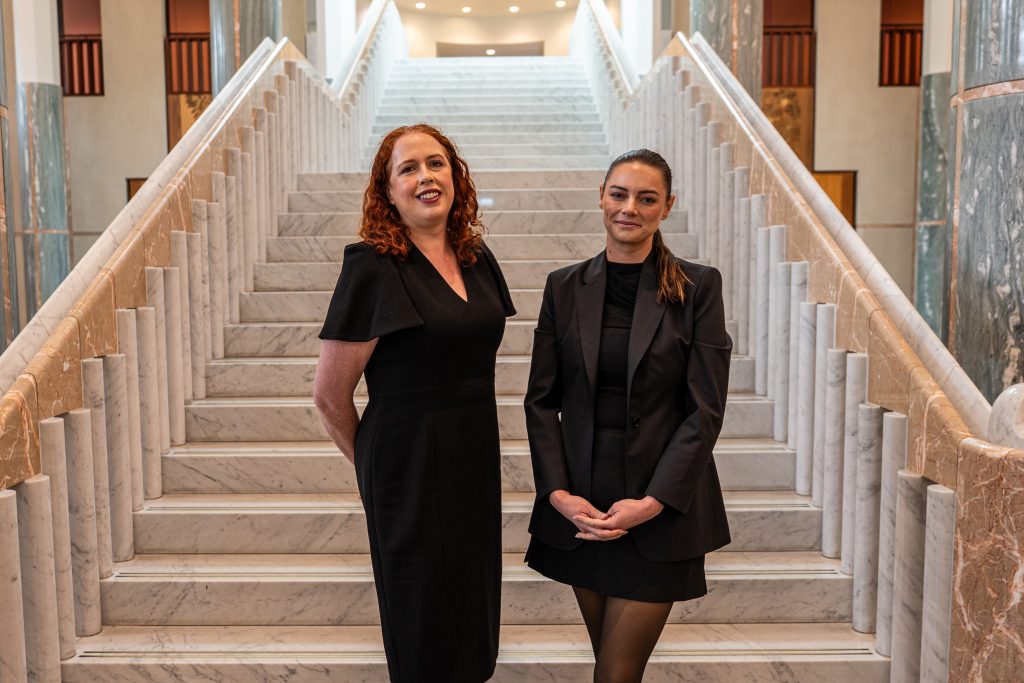
Katherine Berney is the Prevention of Gendered Violence Director at FARE.